 |
Duration: 03:23 minutes Upload Time: 2007-09-03 13:01:02 User: CarbideTip :::: Favorites :::: Top Videos of Day |
|
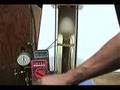
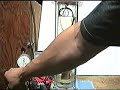
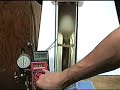
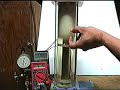
Description: This shows the changes in amps when vacuum is applied. |
|
Comments | |
| holywdtughguy ::: Favorites 2007-09-03 17:19:55 it is nice to see good work such as yours 5**** are you using strait DC and what kind of tubes are you useing. __________________________________________________ | |
| CarbideTip ::: Favorites 2007-09-03 18:24:56 Thank you hollywood. Yes, DC from car batt. 3/4 inside 1" 304 stainless. __________________________________________________ | |
| gibs7 ::: Favorites 2007-09-05 01:01:31 Good work! It would be interesting to measure output (ml/min.)difference. Thanks. __________________________________________________ | |
| CarbideTip ::: Favorites 2007-09-05 07:23:21 Thank you, Yes, working on that now. __________________________________________________ | |
| CarbideTip ::: Favorites 2007-09-05 07:34:42 Another thing I noticed the cell sat overnight, there was .7mv on the cell. Then I applied vacuum and the volts climbed to about 6.0mv and then started to drop. I removed the vacuum and it started to rise again above 11.0mv before it dropped again. __________________________________________________ | |
| dthedruid ::: Favorites 2007-09-06 12:38:46 The Stainless is actually 316L. They are about 8 inches in length and have a gap of about an 1/8 of an inch. __________________________________________________ | |
| CarbideTip ::: Favorites 2007-09-06 15:22:11 Thx D. I thought it was 304. __________________________________________________ | |
| adam3176 ::: Favorites 2007-09-09 04:33:51 OMG Thats the most bubbles i seen from Just one rod. HOLY COW he is on to somthing with the vacume __________________________________________________ | |
| h2opower ::: Favorites 2007-09-10 01:17:50 Again I thank you for showing that my theory on vacuum electrolysis works. The math can be found on overunity dot com in the magdrive section, look for h2opower's comments. Again thanks __________________________________________________ | |
| dthedruid ::: Favorites 2007-09-10 09:50:59 One thing to remember is that even though it appears to be more production, the volume is not necessarily increased. Once the bubbles hit a regular pressurized system they shrink back to their original size thus decreasing the volume. We need to test the actual volume being produced in both instances. The thing that is very interesting is that with a vacuum the amperage decreases. That might be one key to this. __________________________________________________ | |
| dthedruid ::: Favorites 2007-09-10 09:51:18 We are in the process of building a volume measuring device. Also there is more to come, Carbide has been a busy boy. __________________________________________________ | |
| j777777 ::: Favorites 2007-09-13 11:05:04 I had long suspected a vacuum mixed with a wfc would be interesting. __________________________________________________ | |
| seshkanuri ::: Favorites 2007-09-14 08:43:02 You have not mentioned the Cell temperature. This gas production was observed in many production cells under vaccum. But that was water evaporating at 65 to 70 Degrees under vaccum. It is not Hydrogen and Oxygen. __________________________________________________ | |
| dthedruid ::: Favorites 2007-09-14 14:01:18 I think you mean to say the water is boiling at room temperature. Remember all we are doing when we apply a vacuum is lowering the water's vapor pressure. If you watch the water as the vacuum is applied the water does boil, but it stops as soon as the vapor pressure raises enough to keep the water liquid. That is caused by water turning to gas and creating a pressure. That pressure holds the water in liquid state. __________________________________________________ | |
| dthedruid ::: Favorites 2007-09-14 14:06:37 When you apply heat to water on the stove you are exciting the molecules and making them break free of the water's vapor pressure. You can do the same thing by removing the atmospheric pressure. Interesting experiment is to take ice and put it in a vacuum at 20 degrees Fahrenheit. As you increase the vacuum it turns from ice to water, even though it should remain in solid form at that temp. If you put enough of a vacuum it goes from solid (ice) to gas (steam). That is called sublimation. __________________________________________________ | |


No comments:
Post a Comment