 |
Duration: 08:27 minutes Upload Time: 2007-08-10 22:08:07 User: ZeroFossilFuel :::: Favorites :::: Top Videos of Day |
|
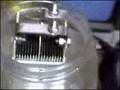
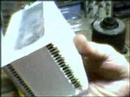
Description: ASTONISHING RESULTS with my new ZooFFer cell!!! |
|
Comments | |
| ZeroFossilFuel ::: Favorites 2007-08-10 22:52:11 Other data: Current draw is not a linear function to voltage! 9v=0.3A, 12v=0.6A, 15v=0.9A, 18v=1.8A, 21v=5.4A, 24v=10.0A. The behavior is almost like a zener diode near the breakdown voltage only not quite as sharp. In this instance, at this electrolyte concentration, 18v seems to be the critical voltage. More to come! ZFF __________________________________________________ | |
| czarwright ::: Favorites 2007-08-10 22:52:37 Hello ZFF Very Cool, Great work can't wait to see its output. __________________________________________________ | |
| seshkanuri ::: Favorites 2007-08-10 22:55:20 Zff, Can you do these experiments using a 12V cell. As that is the best way to bench mark it. __________________________________________________ | |
| ZeroFossilFuel ::: Favorites 2007-08-10 22:55:58 The point I forgot to make about the inlet size at the bottom is that it is roughly the same size as the outlet at the top. __________________________________________________ | |
| InternetEasy ::: Favorites 2007-08-10 23:01:24 Why use 24 volts? if adapable to your car the available supply is 12 volts. I would like to see the middle plate atached to (+) and the outer plates to (-). __________________________________________________ | |
| InternetEasy ::: Favorites 2007-08-10 23:02:28 I built a cell with - ++ - with the + plates touching and only leaving a space between the -. This resulted in two flows of hydrogen through the only two spaces between the (-) on both sides of the touching (+) Plates. Summary: my cell 4 1/2" x 3" Oval shaped & ruffeld like the potato chip 4 cell unit with two seperat flows of Hydroen as configuard -(space)++(space)- Results as much as you present here. I will be posting a video soon. __________________________________________________ | |
| ZeroFossilFuel ::: Favorites 2007-08-10 23:41:51 I did not choose 24v as the design optimum. The electrolyte concentration I started out with chose it for me. Baby steps, data collected at each step. My plates ar already molecularly polarized for +nnnnnnnn-nnnnnnnn+. I have no intention of reversing the polarity now. You, however, are certainly welcome to replicate my work and reverse it yourself. __________________________________________________ | |
| ZeroFossilFuel ::: Favorites 2007-08-10 23:45:32 I can't wait. __________________________________________________ | |
| bornman88 ::: Favorites 2007-08-11 02:39:54 Welcome to the club! Well done!! __________________________________________________ | |
| bluestix ::: Favorites 2007-08-11 04:17:16 Its hard to claim awesome output without actually measuring output. Why is everyone so afraid to measure output? Its easy. Use a scale. Weigh the water at the beginning and weigh it at the end. Let it run for like an hour. __________________________________________________ | |
| sabriath ::: Favorites 2007-08-11 07:10:09 Actually, voltage and amperage can be altered throughout a circuit. Currently the car batter does produce 12 volts, but an average battery also contains 550 cca (cold crank amps). This yields a possibility to use 6600 watts (12x550). ZFF is using only 240 watts (3.63% of battery), there are voltage doubler circuits that you can make or get at radio shack. =) __________________________________________________ | |
| ZeroFossilFuel ::: Favorites 2007-08-11 10:26:02 Here's the real question: Why are <b>YOU</b> so quick to criticize! 30 minutes later I do give gas output. If you can match or beat my output per watt input, do it! Game on. __________________________________________________ | |
| ZeroFossilFuel ::: Favorites 2007-08-11 10:31:50 Okay, it's now pretty clear that 8 neutral plates is way to many for a 12v application. The next configuration will be +nnn-nnn+nnn-nnn+. If I count going away from the present - electrode, all I will do to test is slide an electrode strip in between n-plates 4 & 5, tie them together and make those the -. __________________________________________________ | |
| sabriath ::: Favorites 2007-08-11 11:40:58 Well using the formula ml/Es (amount produced over watt-time) considering you haven't created a loop in circuit to find efficiency seems like the best right now. The prior cell was .0271, while this new cell is .0651, giving 2.4 times better results. Although you do have approx 800 watts free from the alternator, the key point would be as long as you produce more ml/s. =) __________________________________________________ | |
| bluestix ::: Favorites 2007-08-11 12:45:25 I saw your other video after I posted this. I just got a function generator and some super high voltage transformers so I guess its my serve. __________________________________________________ | |



No comments:
Post a Comment